Dental Crowns & Bridges in Oakboro: When a Damaged or Missing Tooth Needs More Than a Filling
August 21, 2026A filling can fix a lot, but sometimes a tooth has lost too much structure for a filling to do the job well. Maybe an old filling has cracked, a large piece of the tooth broke while you were eating, or decay has spread far enough that there is not much healthy tooth left to support another filling. And if a tooth is already missing, the problem changes again because now there is an open space to restore.
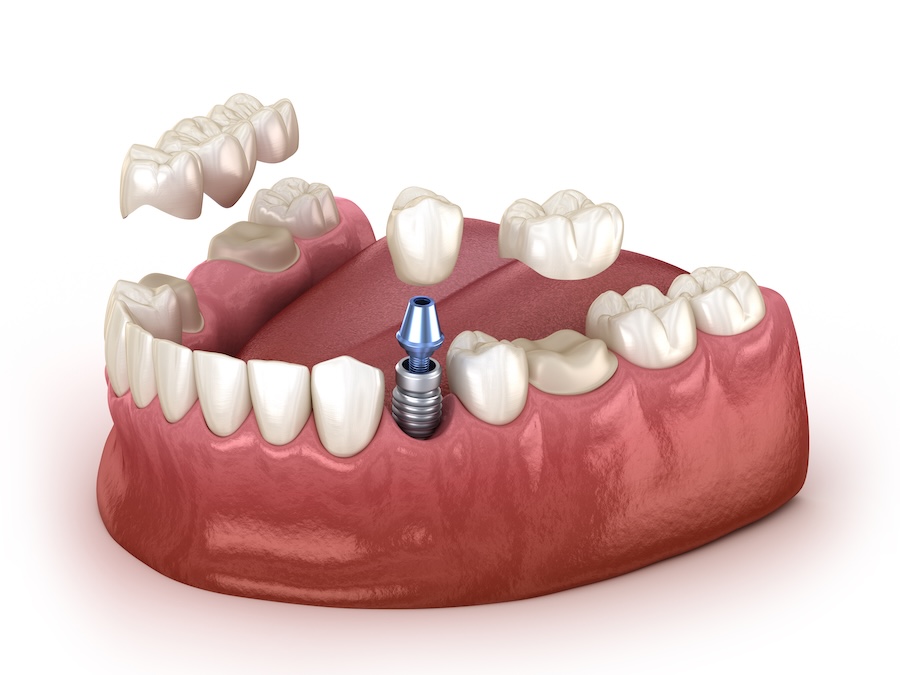
That is where dental crowns and bridges come in. A crown covers and protects a damaged tooth, while a bridge can replace a missing tooth by using the teeth beside the space for support. So, although both are fixed restorations, they are used for different reasons.
At Oakboro Family Dentistry in Oakboro, NC, Dr. Charles T. Bobo, Dr. Elisabeth Blackman, and Dr. Brenna Harrison can look at how much healthy tooth remains, whether there are cracks, and how the tooth handles your bite. If a tooth can still be saved but needs more support, a crown may be recommended. If the tooth is already gone, a bridge may be one way to restore the space.
Dental Crowns & Bridges in Oakboro
A dental crown fits over a tooth that has been weakened, broken, heavily filled, or treated with a root canal. Instead of replacing only one damaged area, the crown covers the visible part of the tooth and helps hold the remaining structure together. So, when a tooth is still worth saving but no longer has enough strength for another filling, a crown can give it more support.
A dental bridge fills the space left by a missing tooth. Traditional bridges usually rely on the teeth on either side of that space for support, with a replacement tooth connected between them. Once the bridge is cemented in place, it stays in the mouth rather than coming in and out like a removable partial denture.
If the damaged tooth is still restorable, a crown may allow you to keep it. But if the tooth cannot be saved and needs to be removed, then the open space becomes the next concern. At that point, a bridge may be one way to replace the tooth and help restore the way you chew.
When a Filling May Not Be Enough
Fillings work best when there is enough healthy tooth around the damaged area to support them. If a cavity is small or moderate, the decayed part can be removed and replaced with filling material. But once a large portion of the tooth is already missing, another filling may leave the remaining walls too thin.
Large old fillings can create the same situation over time. A tooth that has been filled several times may have only narrow sections of enamel left around the restoration. Then a bite on something firm can cause one of those sections to crack or break away.
At that point, replacing the old filling with an even larger one may not give the tooth enough support. A crown can cover the weakened areas and spread biting pressure across more of the tooth. As a result, the tooth is less likely to rely on a few thin sections every time you chew.
Dr. Bobo, Dr. Mogy, or Dr. Bedingham will also look at where the damage is, how deep it goes, and how much force the tooth takes when you chew. A back molar has a different job from a front tooth, so the amount of support each one needs can be different. Cracks, previous dental work, and the condition of the remaining enamel all help determine whether a filling is still enough.
When a Dental Crown May Be Recommended
A crown may be recommended after a large piece of a tooth breaks off. Sometimes the fracture happens suddenly while eating, but other times it develops around an old filling that has been under pressure for years. If enough healthy tooth remains, a crown can rebuild the shape and cover the weakened areas.
Crowns are also commonly used after root canal treatment, especially on back teeth. A tooth that needed a root canal may already have lost a large amount of structure from decay, cracks, or older fillings. Once the infection has been treated, a crown can help protect what remains.
A badly worn tooth may need a crown as well. Grinding and clenching can flatten the biting surface over time, and the tooth may become shorter or weaker than the teeth around it. If enough structure has been lost, rebuilding the tooth with a crown can restore its height and give you a stronger chewing surface.
Sometimes a crown can also improve the appearance of a tooth that already needs structural work. A heavily restored or misshapen tooth can be rebuilt so it fits the smile better while also protecting the tooth underneath. So, when strength and appearance are both part of the problem, one restoration may be able to address both.
What a Cracked Tooth Can Feel Like
A cracked tooth does not always hurt all day. You may get a sharp twinge when you bite on something firm, then feel fine again a few minutes later. Because the pain can come and go, it is easy to keep chewing around the tooth and assume it will settle down.
Cold drinks may start bothering the tooth too, especially if the crack reaches into the inner layers. Some people notice pain when they release their bite rather than when they first bite down. You may also start chewing on the other side without really thinking about it.
Small surface cracks do not always weaken a tooth enough to need treatment, while deeper cracks can leave the tooth more vulnerable to breaking. Dr. Bobo, Dr. Mogy, or Dr. Bedingham can check where the crack runs and how much of the tooth is still stable. Then they can determine whether the tooth needs a filling, crown, root canal, or another treatment.
If a crack extends too far below the gumline or splits the tooth into separate pieces, saving it may not be possible. In that situation, the tooth may need to be removed. From there, a bridge, implant, or another replacement option can be considered for the open space.
When a Missing Tooth May Need a Bridge
When a tooth is missing, the teeth beside the space no longer have the same contact they had before. Over time, they can begin to tip or drift toward the gap. The tooth above or below the space may also move farther out because it no longer meets an opposing tooth.
As those changes happen, you may start favoring the other side when you eat, especially if the missing tooth is a molar. Firmer foods can feel less comfortable to chew in that area, so the other side begins doing more of the work. Meanwhile, the surrounding teeth may continue shifting, which can change the way the bite comes together.
A traditional dental bridge fills the space with a fixed replacement tooth. Crowns are placed on the neighboring teeth, and the replacement tooth is attached between them. Once the bridge is cemented, you do not take it out for meals or at night.
The supporting teeth need to be healthy enough to hold the bridge. So, Dr. Bobo, Dr. Mogy, or Dr. Bedingham will look at those teeth, the gums around them, and the amount of biting force in that area. If the neighboring teeth are already heavily filled or need crowns, a bridge may fit well into the overall treatment plan.
How a Dental Crown Is Placed
Before a crown is made, the damaged tooth is shaped so the restoration has room to fit over it. Decay and weak material are removed, and the remaining tooth is prepared to support the crown. At the same time, enough healthy structure needs to remain for the restoration to hold securely.
An impression or digital scan is then used to record the shape of the prepared tooth and the way your bite comes together. That information is used to make the final crown. Depending on the treatment process, you may wear a temporary crown while the final restoration is being made.
The temporary crown protects the prepared tooth in the meantime, but it is not meant to take the same abuse as the final one. Sticky foods can pull it loose, while very hard foods can crack it. So, until the permanent crown is placed, it helps to be a little more careful on that side.
When the final crown is ready, Dr. Bobo, Dr. Mogy, or Dr. Bedingham will check the fit and bite before cementing it in place. If one area hits too heavily when you close your teeth, it can be adjusted. Once the bite feels right, the crown becomes part of the tooth you chew with every day.
How a Dental Bridge Is Placed
A traditional bridge usually requires the teeth on both sides of the gap to be prepared for crowns. Those teeth become the anchors for the replacement tooth in the middle. Because they will support the bridge, they need enough strength to handle the extra load.
After the teeth are prepared, impressions or digital scans are taken so the bridge can be made to fit the space and your bite. A temporary bridge may be placed while the final restoration is being made. That protects the prepared teeth and keeps the gap covered in the meantime.
When the final bridge is ready, the fit is checked around the supporting teeth and through the bite. The replacement tooth should sit naturally in the open space without feeling bulky. Once everything fits as planned, the bridge is cemented in place.
After that, cleaning under the bridge becomes part of the daily routine because the replacement tooth is connected to the crowns beside it. Regular floss cannot drop straight down between those units. So, a floss threader, interdental brush, or water flosser can help clean underneath the replacement tooth and along the gumline.
What Crowns and Bridges Are Made From
Crowns and bridges are commonly made from tooth-colored materials that can be matched to the teeth around them. Porcelain, ceramic, and zirconia can all create a natural-looking result, while the exact material depends on where the restoration sits and how much biting force it needs to handle. A front tooth may call for a different balance of strength and appearance than a back molar.
Some restorations may also use metal or a combination of metal and porcelain. These materials can be helpful in areas that take heavy chewing pressure, especially when strength is a major concern. Dr. Bobo, Dr. Mogy, or Dr. Bedingham can explain which material is best suited to the tooth being restored.
The bite also plays a role in that choice. A back tooth that takes strong chewing force needs a restoration that can hold up to that pressure, while a front tooth may place more emphasis on how closely the material blends with nearby teeth. So, the material is chosen around both how the restoration needs to function and how it should look.
How Long Dental Crowns Can Last
A crown takes on the same chewing forces your natural tooth used to handle, so its lifespan depends on your bite, habits, and the condition of the tooth underneath. The crown itself cannot decay, but the natural tooth can still develop a cavity near the edge of the restoration. If plaque sits along that margin, decay can eventually work its way underneath.
Brushing around the gumline and flossing along both sides of the tooth helps keep that area cleaner. Regular dental visits also give Dr. Bobo, Dr. Mogy, or Dr. Bedingham a chance to check the crown margins and the tooth underneath. If the edge starts to break down or the crown becomes loose, it can be addressed before more damage develops.
Grinding and clenching can put extra stress on the crown night after night. Over time, that pressure can chip the material or strain the tooth underneath. So, if you grind, a nightguard may be recommended to reduce some of that force.
Chewing ice, biting hard objects, or using your teeth to open things can damage a crown too. Normal chewing is what the restoration is designed for. As a result, avoiding those extra forces can help protect both the crown and the tooth supporting it.
How Long Dental Bridges Can Last
A bridge depends on the teeth that support it, so keeping those teeth healthy is a big part of keeping the restoration in place. If one support tooth develops decay or significant gum disease, the bridge can be affected too. That is why cleaning around both crown edges and under the replacement tooth is so important.
Food and plaque can collect beneath the replacement tooth if the area is skipped. A floss threader or interdental brush can reach underneath where a regular toothbrush cannot. Once you get used to the extra step, it usually fits into the same routine as the rest of your brushing and flossing.
Heavy grinding or clenching can also put extra pressure on the bridge and the teeth underneath it. If the bite is strong in that area, Dr. Bobo, Dr. Mogy, or Dr. Bedingham may recommend a nightguard. That can help reduce wear on the restoration and the supporting teeth.
If a bridge starts feeling loose, sore, or different when you bite, call the office rather than waiting for your next cleaning. Food suddenly catching in a new spot can also be worth mentioning. Those changes can point to a problem with the bridge, the gumline, or one of the supporting teeth.
What Can Happen When a Damaged Tooth Keeps Breaking
A cracked or heavily decayed tooth cannot rebuild the missing structure on its own. If more pieces break away, a tooth that could have been restored with a crown may eventually lose too much structure to support one. As the damage spreads, the available treatment options can become more limited.
Decay can also move deeper toward the pulp inside the tooth. If bacteria reach that area, root canal treatment may be needed before the tooth can be restored. And if too much of the tooth or root is damaged, extraction may become necessary.
A missing tooth creates a different problem because the surrounding teeth can begin moving into the space. The longer that happens, the more the bite can change. Then replacing the missing tooth may require more planning than it would have before those teeth shifted.
So, if a tooth keeps breaking around an old filling, hurts when you bite, or suddenly loses another piece, have it checked. The same applies if a missing tooth is starting to affect how you chew. Dr. Bobo, Dr. Mogy, or Dr. Bedingham can see what is happening and explain which options are still available.
How to Care for a Crown or Bridge
Crowns should be brushed the same way as natural teeth, with attention around the edge where the crown meets the gumline. Plaque tends to collect in that area if the toothbrush repeatedly misses it. Flossing also helps clean the sides of the tooth where the brush cannot reach.
A bridge needs the same brushing, but there is an extra space underneath the replacement tooth. A floss threader, interdental brush, or water flosser can help clean that area. Dr. Bobo, Dr. Mogy, or Dr. Bedingham can show you how to reach underneath the bridge without irritating the gums.
If a crown or bridge ever feels loose, avoid chewing hard foods on that side and call Oakboro Family Dentistry. Food and bacteria can get underneath a loose restoration, and the supporting tooth may be more vulnerable once the cement seal is broken. Getting it checked sooner may prevent more damage.
The same goes for a restoration that suddenly feels high when you bite. A crown or bridge should settle into the bite without one spot taking all the pressure. If chewing feels sore or uneven, a small adjustment may be all that is needed.
Choosing Between a Crown, Bridge, or Another Option
A crown is usually considered when the tooth is still present and can be saved, but it needs more support than a filling can provide. A bridge comes into the picture when a tooth is missing and the surrounding teeth can support a fixed replacement. From there, the condition of the tooth and the surrounding area helps narrow the options.
A damaged tooth may still be treatable with a filling in some cases, while a missing tooth may be replaced with an implant or removable partial denture instead of a bridge. So, the amount of remaining tooth structure, bone support, gum health, and condition of the neighboring teeth all need to be considered together. The location of the tooth and the way you chew also affect the recommendation.
If the neighboring teeth are already heavily restored or need crowns, a bridge may fit naturally into the plan. But if those teeth are untouched and healthy, an implant may be worth discussing because it does not require preparing them for crowns. Dr. Bobo, Dr. Mogy, or Dr. Bedingham can compare those options based on the actual space and the health of the teeth around it.
The same applies to a damaged tooth. If a filling can still restore it well, a crown may not be necessary. But when cracks, decay, or old dental work have left the tooth too weak, a crown can give it the coverage another filling cannot.
Dental Crowns & Bridges at Oakboro Family Dentistry in Oakboro, NC
When a tooth has lost too much structure for a filling, a crown can often rebuild it and protect what is left. If the tooth is already missing, a bridge can fill the space and restore a fixed chewing surface. So, the next step depends on how much healthy tooth remains, what the surrounding teeth look like, and how your bite is working.
At Oakboro Family Dentistry in Oakboro, NC, Dr. Charles T. Bobo, Dr. Austin Mogy, and Dr. John Bedingham can examine the damaged or missing tooth, explain what they see, and walk through the options with you. Call Oakboro Family Dentistry to schedule a visit with Dr. Bobo, Dr. Mogy, or Dr. Bedingham—we’d be glad to help you get the tooth taken care of and feel comfortable chewing on that side again!
Contact UsCategorised in: Dental Bridges, Dental Crowns

